Traffic Exchange Surfing Bonuses: How to Evaluate Promotions Before You Participate
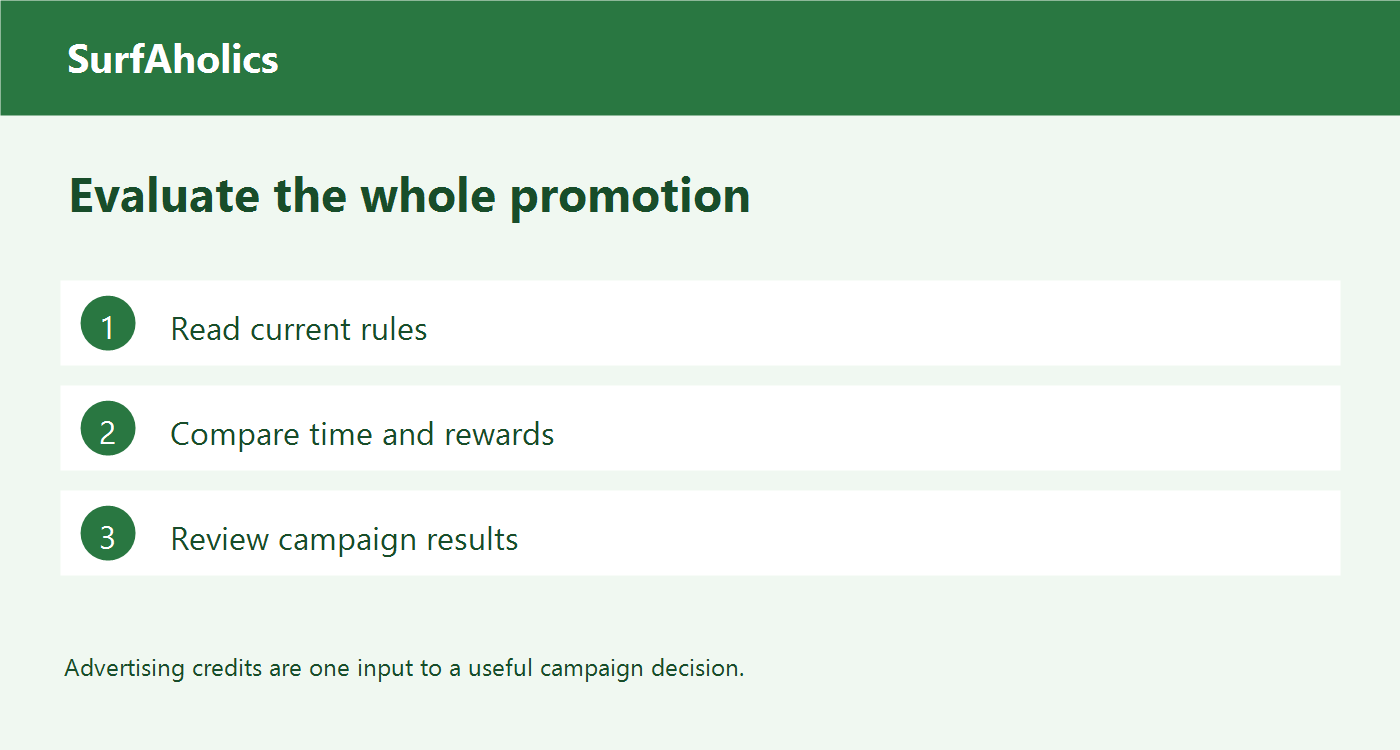
Traffic exchange surfing bonuses can be useful to review, but a larger credit total is only one part of an advertising decision. When you compare opportunities on SurfAholics TE, start with the current rules, the time required, and the destination you plan to advertise. A promotion is most useful when you understand how the reward fits your campaign.
Separate ordinary credits from promotional rewards
A traffic exchange may describe several different benefits: credits earned through ordinary participation, a temporary promotional reward, or a continuing membership feature. Read each one separately. Do not assume that an old announcement still describes the current offer, or that a temporary bonus becomes an ongoing account benefit.
Check the service’s current official instructions before you participate. Note the qualifying activity, any stated eligibility conditions, the kind of reward, and how that reward is applied. If a condition is unclear, ask through the service’s established help route before relying on it. Historical coupon codes and old reward quantities should not be treated as current instructions.
Compare the time and the useful result
An imagined example can make the comparison easier. Suppose one activity takes twenty minutes and earns forty advertising credits. A second takes the same time and earns sixty. Those are hypothetical figures, not current offers from either service. The second total is larger, but you still need to know what each credit provides and whether it supports your goal.
Compare like with like. Banner impressions, text advertisements and website visits are different placements. An activity that earns one kind of advertising exposure cannot automatically be judged against another by looking at the number alone. Keep a short note of the placement, time spent, and destination being promoted.
Consider the audience and the landing page
Before assigning rewards to a URL, read that page as a new visitor. Is its purpose clear? Does its main link work? Does the offer still exist? More exposure will not repair a confusing or expired destination. Make a small improvement before using additional credits when the page needs attention.
If you also advertise through Wall Street TE, keep its rules, placements and reporting separate. Do not transfer assumptions about one exchange’s rewards to the other. You can compare results later using clearly identified campaign notes.
Read limits before changing your plan
Review any published timing, membership or account conditions associated with an incentive. Record only what the current official page actually says. Avoid inventing a deadline, assuming that a reward is unlimited, or treating account credit balances as proof that a particular advertising URL has credits assigned.
A promotion should fit your existing advertising budget and available time. You do not need to pursue every reward. It can be reasonable to continue an ordinary routine when an extra activity does not support your current campaign.
Measure the campaign after the promotion
Keep activity totals and outcomes separate. Views can show that a placement received exposure. They do not by themselves prove subscriber interest, sales, or an improvement in organic search results. Review the measurements your tools actually provide and avoid drawing a revenue conclusion from a credit balance.
Use a simple record: date, service, activity, time spent, reward type, advertised URL, and observed outcome. If you change several things at once, note that you cannot confidently attribute a later result to the bonus alone.
Choose one useful next step
Start by checking the current promotion rules and the page you intend to advertise. Then decide whether participation supports a specific goal. For related planning guidance, explore the Advertising & Traffic hub.
An informed choice depends on the whole process: understand the reward, prepare the destination, and review what happened. Credit totals are useful inputs to that decision, alongside your time, audience and campaign results.